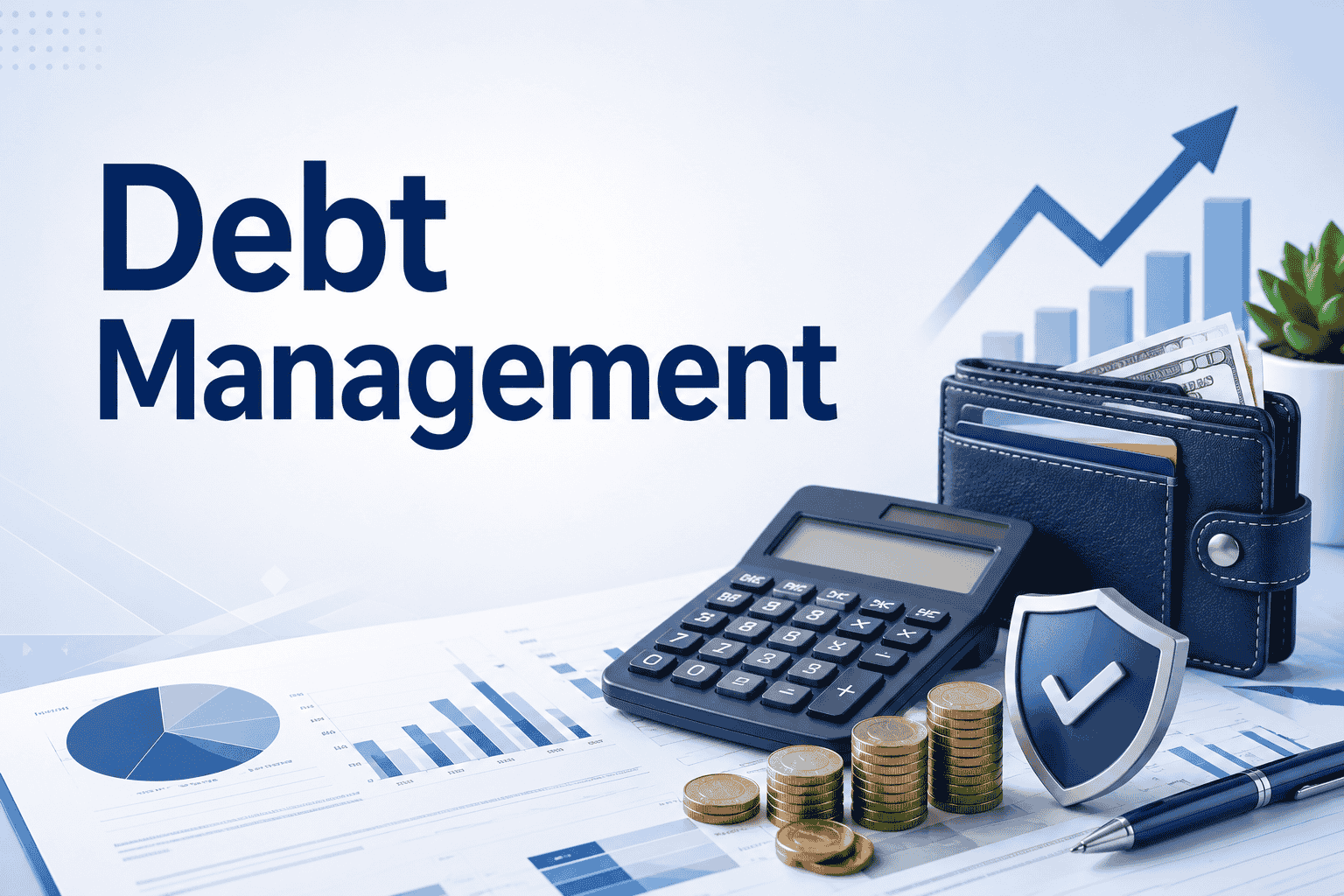
Debt management is the process of planning and managing your financial obligations in a way that ensures timely repayment and minimizes the impact on your overall financial health. It involves assessing your debt, creating a structured repayment plan, and exploring various strategies to reduce or eliminate debt over time. Effective debt management helps individuals and businesses regain control over their finances, reduce stress, and avoid further financial strain.
Debt is a common part of life for many people and businesses, but without proper management, it can spiral out of control. Poor debt management can lead to missed payments, increased interest rates, and even legal action in severe cases. By implementing a structured debt management plan, individuals and companies can avoid these risks, improve their credit scores, and work toward financial stability.
Assessment of Current Debt: The first step in debt management is to assess the total debt load. This includes evaluating credit card balances, loans, and any other outstanding obligations. Understanding the full scope of your debt helps you prioritize which debts to pay off first and how to allocate your resources effectively.
Creating a Repayment Plan: Once the debt is assessed, the next step is to create a repayment plan. This plan should focus on paying off high-interest debts first while ensuring that minimum payments are made on other debts. A structured plan provides a clear roadmap for how the debt will be cleared over time.
Negotiating with Creditors: In some cases, negotiating with creditors can lead to better repayment terms, such as lower interest rates, reduced fees, or extended repayment periods. It's often involves working with creditors to create a more manageable payment plan that fits within the individual's or business's budget.
Debt Consolidation: Debt consolidation is a common debt management strategy where multiple debts are combined into a single loan with a lower interest rate. This simplifies repayment by reducing the number of payments and can save money in interest charges over time.
Debt Settlement: Debt settlement involves negotiating with creditors to pay off a portion of the debt, typically in a lump sum, in exchange for a reduction in the total balance. While this can be an effective strategy, it may have a negative impact on credit scores and is usually a last resort.
Professional Help: For those struggling with overwhelming debt, seeking professional help from a credit counseling agency or financial advisor may be necessary. These experts can provide personalized advice, help with negotiating with creditors, and guide individuals or businesses toward better financial decisions.
Improved Credit Score: By making timely payments and reducing the total amount of debt, debt management can significantly improve credit scores. This opens up opportunities for better interest rates on future loans and financial products.
Reduced Stress: Having a structured plan in place helps reduce the anxiety that often accompanies unmanageable debt. Knowing exactly how much to pay and when can bring peace of mind.
Financial Stability: Effective debt management leads to greater financial stability. As debt is reduced and managed effectively, individuals and businesses can shift their focus to building savings, investing, and improving overall financial health.
Avoiding Bankruptcy: It can help prevent the need for more drastic measures, such as bankruptcy, by offering viable solutions for repayment. It allows for gradual debt reduction without losing assets or going through a lengthy legal process.
Apply for LEI Registration with MNS Credit Management Group.
A Validation Agent appointed by GLEIF for LEI issuance in India.
Apply Now| Pros | Cons |
|---|---|
|
|
Creditors frequently agree to waive late fees and cut interest rates on outstanding bills as part of a debt management plan.
An interest rate reduction from 20% or more to less than 15% is a typical effect, depends from region to region.
The main goal of a plan is to pay off all unsecured debts in the bare minimum time.
Only uncollateralized debt qualifies for the program. Mortgages, car loans, and other secured debts will not qualify. This will also not work for student loan debts.
The client will be prohibited from applying for any credit cards or loans while in the Debt Management Plan. Clients make monthly payments to the agency to ensure the timely payment of creditors. If payments are late, creditors may raise the interest rates and add late payment fees.
A borrower should assess his or her condition before enrolling in a debt management plan, including summing up sources of income and establishing a list of bills outstanding. This will help you better understand your alternatives, and it will also prepare you for when the credit counsellor asks for the same information.
The next step is to choose a qualified debt management company. To identify qualified candidates, contact one of the national non-profit credit counselling organisations, such as the National Foundation for Credit Counselling (NFCC) or the Financial Counselling Association of America (FCAA). You can also verify with the attorney general of your state or the Better Business Bureau.
Typically, an agency will begin with an introductory counselling session during which you will discuss your financial status, and the debt collection advisor will assist you in creating a personal debt payback plan. You may be scheduled for follow-up sessions as well. A proper way out and process are likely to be offered by the agency.
The counsellor will call the creditors you intend to pay and try to work out fee waivers and reduced interest rates with them. You’ll agree to pay the agency a set monthly fee, which will be divided among your creditors.
A certain success fess or percentage is charged by a Debt Management Company, such as MNS Credit Management Group who works on a contingency fee only. That is, they are liable to charge their fees only if recovery is made. If you are in financial distress, you may be able to negotiate a lower charge or a waiver.
You’ll be asked to sign a contract that details how much you’ll pay and how the invoice /fee will be charged spent by the agency. You must also promise not to open any new credit cards for the duration of the plan. When the last payment is made, you’ll have paid off all of the unsecured creditors covered by the plan in the given time period.
| Aspect | Debt Management | Debt Settlement |
|---|---|---|
| Approach | Refinances the debt at better repayment terms. | Settles for less than the total debt owed. |
| Payment Amount | Pays the full outstanding balance. | Pays a reduced negotiated amount. |
| Credit Score | Less negative impact. | More negative impact. |
| Time | Usually takes longer. | May resolve debt faster. |
| Best For | People who can afford regular monthly payments. | People facing financial hardship. |
Steps Involved: Starting a DMP involves contacting a credit counseling agency, undergoing a financial assessment, and agreeing on a payment plan. The credit counselor works with creditors to lower interest rates and fees, and the individual makes a single payment to the agency.
Choosing the Right Debt Management Service: Research and compare credit counseling agencies and their fees. Ensure the agency is accredited and has a track record of helping clients successfully manage debt.
While there are advantages to debt management, there are some drawbacks:
Some common mistakes include:
Most crucial, when determining which debt management plan is the most effective, learn about the company’s services and expenses. Never put your faith in verbal assurances. Everything should be in writing, and contracts should be carefully examined.
Frequently Asked Questions (FAQ)
Q1: Why is debt management important?
A1: Debt management is important because it helps prevent the negative consequences of unmanaged debt, such as late fees, high-interest rates, or legal action. It ensures timely repayment, improves financial stability, and helps build a healthier credit profile.
Q2: How do I create a debt management plan?
A2: To create a plan, begin by assessing your debts and organizing them by interest rate and balance. Prioritise high-interest debts and consider options like debt consolidation or negotiating with creditors for better repayment terms. Having a clear budget will also help ensure timely payments.
Q3: Can debt management improve my credit score?
A3: Yes, debt management can improve your credit score. By making consistent, timely payments and reducing your debt load, your credit score will gradually improve, leading to better loan terms and financial opportunities in the future.
Q4: What is debt consolidation?
A4: Debt consolidation involves combining multiple debts into one loan, typically at a lower interest rate. This makes it easier to manage your payments by reducing the number of loans and simplifying the repayment process.
Q5: What are the benefits of professional debt management services?
A5: Professional services can provide personalized advice, negotiate with creditors on your behalf, and guide you through the process of managing your debt effectively. These services help simplify the process, especially for individuals or businesses with complex financial situations.
Q6: How do I know if I need debt management help?
A6: You may need help if you’re struggling to make minimum payments, have multiple creditors, or feel overwhelmed by your debt load. Professional help, like credit counseling, can provide guidance and relief.
Q7: Can debt management help businesses?
A7: Yes, its strategies can also benefit businesses. Businesses help manage operational costs, renegotiate terms with creditors, and create a sustainable repayment plan to maintain financial stability and avoid default.
Q8: How does a Debt Management Plan work?
A8: A Debt Management Plan works by assessing your total debt, income, and expenses. Based on this information, a repayment schedule is created. The debtor then makes regular payments, which are distributed to creditors until the debt is fully repaid.
Q9: What are Debt Management Strategies?
A9: Debt management strategies are practical methods used to organize, reduce, and repay debt more effectively. These strategies may include creating a budget, prioritizing high-interest debts, consolidating multiple debts, negotiating better repayment terms, setting up a debt repayment plan, and avoiding unnecessary borrowing. The goal is to make debt easier to manage, lower financial stress, and achieve long-term financial stability.
Recommended Read: