A business credit report provides a comprehensive overview of a company's creditworthiness, helping you make informed decisions when engaging in business transactions. Here's what you need to know about business credit reports:
It typically contains:

The Company Profile includes the business' name, incorporation date, and registration number, the address, type of business, and status. This section confirms the existence of the business legally.
Financial Information includes financial statements, as well as the value of the company's financial assets, business, and reputation. This further classifies the company's financial capability.
Payment History shows the company's track record of paying its creditors. A history of timely payments shows the company manages its finances well. A record of late payments will negatively impact the company’s credit ratings.
Credit exposure reflects the company's existing loans, credit facilities, outstanding balances, and available credit limits. It helps assess whether the business is carrying an appropriate level of debt.
Legal records include lawsuits, insolvency proceedings, bankruptcies, tax defaults, court judgments, and regulatory actions. These records help identify legal or financial risks associated with the company.
This section provides details about directors, key executives, and major shareholders. It helps stakeholders understand the company's ownership structure, governance, and leadership stability.
Evaluating the risk of extending credit or doing business with a company relies on Business Credit Reports and Business Credit Scores. Credit Reports Grade a company’s financial reliability and payment history. Business Credit Scores assess a firm’s payment risk. The reports show an organization’s payment history, financial risk, and outstanding obligations. Credit Reports and Scores help lenders, suppliers, and investors assess the risk of credit or investment and the financial burden of the company defaulting. Maintaining a strong Credit Report and Credit Score provides businesses a competitive edge in the financing market and fosters stronger business relationships. Suppliers will agree to better payment terms as the business financing gap will lessen. Suppliers will also assess the company’s finances and approve the sale. Since a firm's success is closely tied to its Credit Report and Score, companies will evaluate and monitor their finances to identify deficits. Companies will assess threats to their financial viability and take measures to prevent the deterioration of their Credit Report and Score.
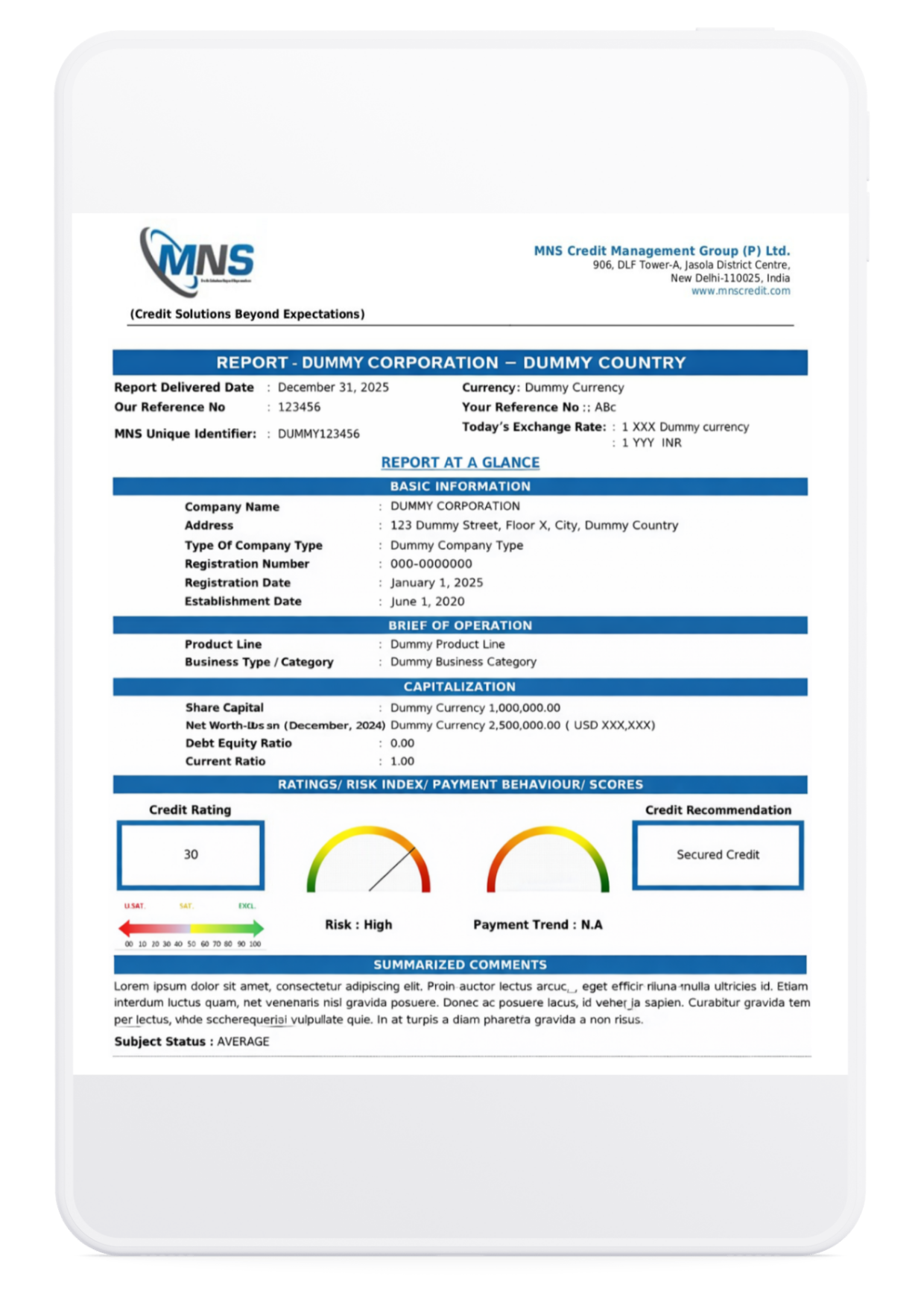
The same things that affect your personal credit report also have an impact on your business credit report, but they do so in terms of a business account this time. Let’s look at 3 such important factors that affect your credit report.
Business credit reports can be accessed from a business credit reporting agency or a corporate information provider. Users usually search based on the company’s name, registration number, tax ID number(s), or corporate identification number(s). It contains information about the company’s financial status, the company’s payment history and delays, legal issues (if any), and the company’s credit report. This information can be used by a business to evaluate the risks associated with doing business with another company.
Organizations can assess potential financial risks via business credit reports before commercial transactions. Reviewing payment histories, current debt, court cases, and the financial solvency of other companies helps organizations mitigate bad financial debts and payment defaults, and business loss risks. Credit reports help in the effective management of credit risk and due diligence.
A Business Credit Score is a numerical rating that reflects a company's ability to repay its financial obligations on time. It is calculated using factors such as payment history, credit utilization, outstanding liabilities, company age, financial stability, and public records. A higher credit score indicates lower financial risk, making it easier for a business to obtain loans, negotiate favorable supplier terms, and build trust with potential partners. Conversely, a lower score may signal higher risk and limit access to financing.
Business credit scoring models assess various financial and operational factors to evaluate a company’s risk. Credit bureaus gather information from banks, suppliers, government records, and financial documents. They consider many elements including payment behavior, outstanding debts, company age, industry/work performance, legal filings, and financial trends. The company is then assigned a credit score that is used by potential lenders and other business partners to gauge the company’s creditworthiness. Companies that pay their outstanding business bills and maintain their financial health generally have a better score.
Several factors influence a company's business credit score, including payment history, outstanding debt, credit utilization, company age, financial performance, industry risk, legal filings, and public records. Consistent on-time payments, healthy cash flow, and low debt levels generally improve a company's credit rating, while defaults, lawsuits, and excessive borrowing can lower it.
Want to Give Your Business Global Validation & Legitimacy?
MNS is a Validation Agent appointed by GLEIF for LEI issuance in India.
There are two metrics to measure creditworthiness – the first is the personal credit score, and the second is the business credit rank.
These metrics are evaluated by lenders before approving a loan. They especially pay close attention to your business credit report and the business’s financial behavior to gauge your creditworthiness. By keeping these healthy, an MSME promoter or owner can get quicker approvals, larger loans, and better interest rates.
A credit report by credit bureaus, such as CIBIL, is like a report card that indicates the financial health of a business and helps lending firms decide whether to extend credit to the enterprise or not.
To arrive at a credit score, credit bureaus consider several factors such as the overall amount of loans that the enterprise currently holds, repayment history of loans, and the length of the borrower’s credit history, among other factors.
The rate at which debt is accruing, or the amount and length of recent loans taken out, is another crucial consideration.
It is possible to enhance the credit score of the business by the timely settlement of invoices, a decrease in the level of incomplete debt, an accurate financial record, regular monitoring of credit reports, settlement of legal disputes at the earliest, low credit use, and strong relations with lenders and suppliers. One of the most efficient means to strengthen business credit is the establishment of a good payment record.
A business's credit score may drop for late payments, loan defaults, excessive borrowing, poor cash flow, high levels of business debt, legal disputes, bankruptcies, tax liabilities, misreporting financials, and too many credit checks. If you can identify these issues and fix them, a business should be able to restore its credit profile.
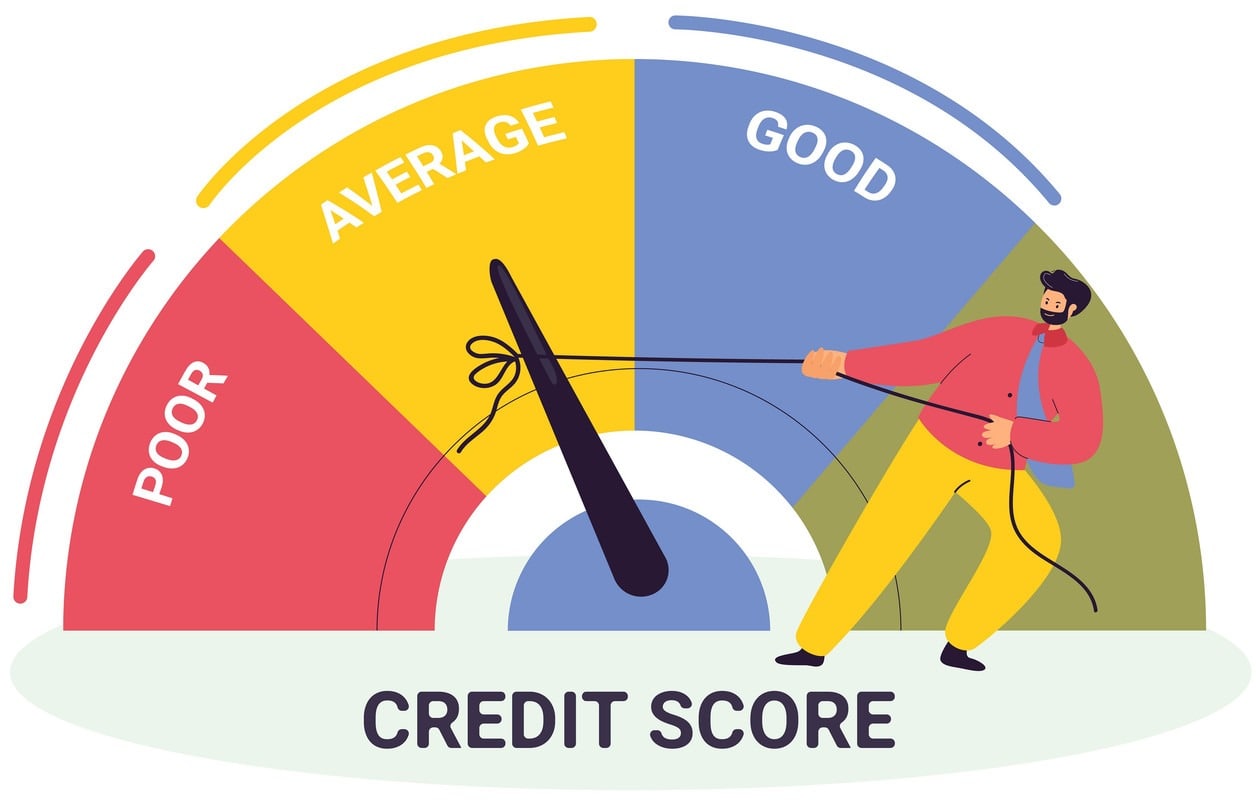
A Business Credit Score measures a company's financial reliability, while a Personal Credit Score evaluates an individual's borrowing and repayment history.
| Aspect | Business Credit Score | Personal Credit Score |
|---|---|---|
| Definition | Business financial health. | Individual creditworthiness. |
| Purpose | Business lending & supplier credit. | Personal loans & credit cards. |
| Based On | Payments, debt, financials, trade credit. | Payment history, credit utilization, loans. |
| Used By | Banks, suppliers, investors. | Banks, lenders, landlords. |
| Linked To | Business entity. | Individual identity. |
| Accounts | Business loans & trade credit. | Personal loans & credit cards. |
| Late Payments | Limits business financing. | Lowers personal credit score. |
| Benefit | Improves business credibility. | Better loan approvals. |
| Example | Supplier checks score before trade credit. | Bank checks score before approving a home loan. |
Assess Financial Health: A credit score check gives you a clear picture of your business's financial status, showing how well you manage debt.
Secure Financing: If you plan on applying for loans or lines of credit, lenders will perform a credit score check. Knowing your score ahead of time helps you understand what to expect.
Negotiate Better Terms: Suppliers and vendors may also check your business credit score before offering favorable payment terms. A solid score could lead to better deals.
Monitor for Fraud or Errors: Regular credit score checks allow you to spot discrepancies or fraudulent activities that could hurt your business.
A Business Credit Report evaluates creditworthiness, while a Due Diligence Report provides a complete assessment of financial, legal, operational, and compliance risks.
| Aspect | Business Credit Report | Due Diligence Report |
|---|---|---|
| Purpose | Evaluates creditworthiness. | Assesses overall business risks. |
| Focus | Credit score, payments, debt. | Financial, legal, operational & compliance review. |
| Used By | Banks, lenders & suppliers. | Investors, acquirers & legal advisors. |
| Use Case | Loans & supplier credit. | M&A, investments & partnerships. |
| Analysis | Credit & financial risk. | Comprehensive business evaluation. |
| Example | Supplier checks report before giving trade credit. | Investor reviews company before acquisition. |
In today’s competitive business environment, having a strong business credit report is crucial. It not only helps you secure loans but also builds trust with customers, partners, and suppliers. A good business credit report can open doors to better financial opportunities, better terms from suppliers, and higher chances of success in your industry.
1. What is a Business Credit Report (BCR)?
A Business Credit Report provides comprehensive credit information on a company's payment history, credit risk, and business legal records. It is a tool used to assess a company's risk in the course of business.
2. Why is a Business Credit Report important?
A Business Credit Report offers organizations reliable financial and business information to minimize credit risk, make assessed business decisions, avoid bad debts, and establish secure business relations.
3. What information is included in a Business Credit Report?
A typical Business Credit Report may include:
4. Who uses Business Credit Reports?
Business Credit Reports are commonly used by:
5. How does a Business Credit Report help reduce credit risk?
Examining a company’s financial stability, payment behavior, and legal history enables businesses to evaluate risk before offering credit and other commercial contracts.
6. Can I check the creditworthiness of any registered company?
Yes. Business Credit Reports can be obtained for many registered companies, enabling businesses to evaluate the financial credibility of customers, suppliers, and business partners.
7. What is the difference between a Business Credit Report and a Consumer Credit Report?
A Business Credit Report looks at a company's financial health and a company's estimable credit risk, while a Consumer Credit Report looks at the credit history and borrowing behavior of an individual.
8. How often should a Business Credit Report be reviewed?
A business credit report should be consulted prior to extending credit or entering into large contracts, bringing on new vendors, or making large investments. This should also be done for existing customers on an ongoing basis.
9. Is a Business Credit Report useful for supplier verification?
Yes. A Business Credit Report is a tool to confirm a supplier's financial solidness, legal standing, and operational reliability. For this reason, it is important for supplier due diligence.
10. Can a Business Credit Report help with debt recovery?
Yes. Credit reports help you understand the financial situation of a debtor, along with the legal records of a debtor’s business along with the business’s current state; this provides important context for developing appropriate debt collection strategies.
11. How can a Business Credit Report improve business decision-making?
Organizations are better able to make credit, procurement, and partnership decisions with the help of verified business information, financial insights, and risk indicators that are made available in Business Credit Reports.
Recommended Read: