A cash flow statement is an important financial report that shows how money moves in and out of a business during a specific period. It helps businesses understand their actual cash position by tracking income received and payments made across daily operations, investments, and financing activities. Unlike a profit and loss statement, which focuses on revenue and expenses, a cash flow statement provides a clear picture of available cash. By analyzing cash flow, businesses can identify financial challenges, plan future expenses, manage working capital, and make informed decisions to support long-term growth.
A cash flow statement shows the cash that comes in and goes out of a business. This helps businesses manage cash liquidity and financial obligations. Cash flow statements also help identify the financial aspects of the business that require management. Business is about the exchange of money. Good accounts receivable management helps recover money owed to a business, which helps achieve positive cash flow.
A cash flow statement is a financial document that shows the movement of cash within a business over a specific period. It records how much cash a company receives and how much it spends through different business activities.
Unlike profit reports, which may include non-cash items such as depreciation or credit sales, a cash flow statement focuses only on actual cash transactions.
This statement helps business owners, investors, and financial managers understand whether a company has enough cash available to operate, pay expenses, invest in growth, and meet financial commitments.
A cash flow statement is one of the three major financial statements, along with the balance sheet and income statement.
A cash flow statement plays a significant role in financial planning and business management. It helps companies understand their current financial position and take timely actions.
Cash is the foundation of daily business operations. Companies require sufficient funds to pay employees, suppliers, rent, taxes, and other operational expenses. A cash flow statement allows business owners to track whether enough cash is available to continue operations smoothly.
Businesses can identify:
Maintaining proper cash availability helps businesses avoid financial disruptions.
Many businesses face cash flow challenges even when their sales are increasing. The main reason is often delayed payments from customers.
Common causes of cash flow problems include:
Cash flow statements help businesses identify when cash generated by operations is less than cash spent. Cash flow statements also help businesses identify when cash on hand will be depleted. Cash flow statements aid businesses in taking timely and appropriate actions to manage financial situations before they worsen.
Business owners need accurate financial information before making important decisions.
A cash flow statement helps in decisions related to:
By understanding future cash availability, businesses can avoid decisions that may create unnecessary financial pressure.
Cash flow forecasting allows businesses to estimate future cash requirements.
Companies can plan:
Accurate forecasting helps organizations maintain financial stability and prepare for unexpected challenges.
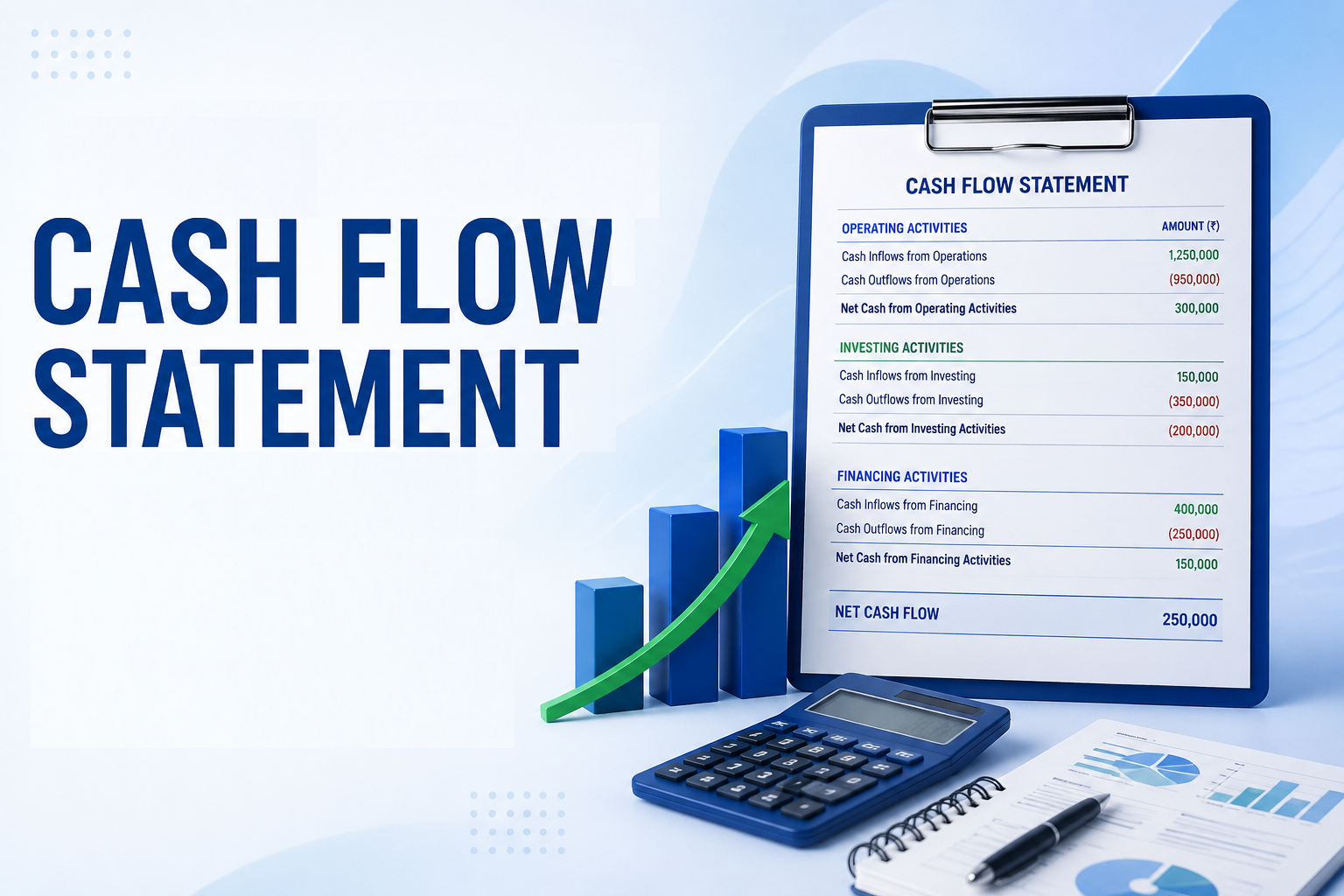
A cash flow statement is divided into three major sections:
Each section provides information about different areas of business cash movement.
Operating activities represent cash generated or spent through the company’s regular business operations. This section shows whether the core business activities are generating sufficient cash.
Examples of Operating Cash Flow:
A positive operating cash flow indicates that the business is generating enough cash through its main activities.
For example, a manufacturing company can achieve a high level of sales. However, if customers do not pay their invoices on time, the company’s cash flow from its operations can become negative. This is a collection and receivables management issue.
Investing activities show cash movement related to long-term assets and investments.
These activities usually represent how a business invests in future growth.
Examples of Investing Cash Flow:
A negative cash flow from investing activities is not always a problem. It may indicate that a company is investing in expansion and future opportunities.
Financing activities represent cash transactions related to business funding and capital management.
Examples include:
This section helps businesses understand how they manage external funding and financial commitments.
A basic cash flow statement follows this format:
The basic formula used to calculate the net change in cash is:
Net Cash Flow = Cash Flow From Operating Activities + Cash Flow From Investing Activities + Cash Flow From Financing Activities
This formula shows whether a business has increased or decreased its cash balance during a specific period.
Many business owners confuse cash flow statements with profit and loss statements. Although both are important financial reports, they provide different information.
| Cash Flow Statement | Profit & Loss Statement |
|---|---|
| Shows actual cash movement | Shows business income and expenses |
| Focuses on liquidity | Focuses on profitability |
| Tracks cash received and paid | Tracks revenue earned and costs incurred |
| Helps manage available funds | Helps measure financial performance |
A company can be profitable but still experience cash flow problems because profits do not always mean immediate cash availability.
Delayed customer payments are one of the biggest reasons businesses experience cash flow challenges.
When customers fail to pay invoices on time, businesses may face:
Reduced Working Capital
Outstanding payments reduce the amount of money available for daily operations.
Difficulty Paying Suppliers
Businesses may struggle to maintain supplier relationships when payments are delayed.
Slower Growth
Companies may postpone expansion plans due to insufficient cash availability.
Increased Financial Pressure
Businesses may need additional loans or credit facilities to manage expenses.
This is why maintaining effective accounts receivable management is essential for long-term financial stability.
Improving cash flow requires proper planning, monitoring, and proactive payment management.
1. Set Clear Payment Terms
Businesses should establish clear payment policies before starting customer relationships.
Important factors include:
Clear communication reduces payment delays.
2. Monitor Outstanding Receivables Regularly
Businesses should regularly review unpaid invoices and identify delayed accounts.
Monitoring helps companies:
3. Maintain Professional Customer Communication
Consistent communication plays an important role in recovering payments.
Businesses should maintain professional follow-ups through:
A respectful approach helps recover payments while protecting business relationships.
4. Work With Professional Debt Recovery Experts
When internal recovery efforts do not produce results, professional debt collection agencies can assist businesses in recovering outstanding payments.
Experienced recovery professionals use structured approaches including:
This allows businesses to improve cash flow without damaging important commercial relationships.
Businesses generally prepare a cash flow statement using these steps:
Step 1: Collect Financial Information
Gather details from:
Step 2: Identify Cash Transactions
Separate transactions into:
Step 3: Calculate Cash Changes
Add cash inflows and subtract cash outflows to determine the net change in cash.
Step 4: Review the Final Statement
Check whether the ending cash balance matches the actual available cash.
MNS Credit Management Group provides professional B2B debt recovery solutions designed to help businesses recover overdue payments and improve financial control. Our structured recovery approach focuses on understanding each case, communicating professionally with debtors, and developing customized recovery strategies based on business requirements.
Our services include:
By helping businesses recover delayed payments, MNS Credit Management Group supports organizations in improving cash flow, reducing financial risks, and maintaining stronger business stability.
Frequently Asked Questions About Cash Flow Statements
1. What is a cash flow statement?
A cash flow statement is a financial report that shows how cash enters and leaves a business during a specific period. It helps businesses understand their liquidity and financial position.
2. Why is a cash flow statement important for businesses?
A cash flow statement helps businesses monitor available cash, manage expenses, identify financial challenges, and make better decisions.
3. What are the three types of cash flow?
The three main types of cash flow are:
4. Can a profitable business have cash flow problems?
Yes. A profitable business can face cash flow issues when customers delay payments, invoices remain unpaid, or expenses increase faster than cash collection.
5. How do unpaid invoices affect cash flow?
Unpaid invoices reduce available cash, affect working capital, delay business growth, and create difficulties in managing regular expenses.
6. How can businesses improve cash flow?
Businesses can improve cash flow through better receivables management, timely invoice collection, proper budgeting, and professional debt recovery support.
7. How to prepare a cash flow statement?
Prepare a cash flow statement by tracking cash inflows and outflows, then categorizing them into operating, investing, and financing activities to calculate the net change in cash.
Recommended Read:
Trusted debt recovery services across major business cities in India.